

Beehive Problems? Call the Vet
From My Cottage by the Bay
More veterinarians are joining the fight to protect honeybee colonies against deadly threats like parasites and diseases. [NY Times]
And why not? While they are not large creatures, they are the small agricultural all-stars who happen to pollinate most of the food we eat. No bees—billions of crops would not be produced
The past two years massive bee die-offs have become common—parasites, pathogens, pesticides and climate change have weakened their condition.
I have two hives here at the cottage. While I provide a “home” for the bees, I refer to them as my bee children, the real beekeeper, Roberta has quite a few hives in various locations. Our last year’s brutal winter froze many of the colonies. By some luck, “my children” came through. But the loss was a devastating emotional and financial loss to Roberta.
Beekeepers have been fighting the war to keep their bees alive against some difficult odds. Now, there is a wake-up in veterinary schools. In Europe, vets have long considered bees micro-livestock and treat them as such. Beekeepers in the U.S must use their experience to analyze the bee problems and treatment, often relying on antibiotics when need. A new change in government rules now forces the beekeeper to use a vet to obtain the drugs. But a vet with bee knowledge is not readily found.
The University of Georgia which was already home to a renowned bee lab and beekeeper certification program has now added a program in honeybee medicine.
Student vets must learn all the drills of the beekeeper—weekly checking the debris at the bottom of each hive for hive beetles, Varroa mites—only a few signs of trouble. Frames are also inspected—is there enough pollen, nectar and honey to keep the bees healthy? Is the hive too crowded? Is the queen happy?
Hopefully it won’t be long before the beekeepers will no longer fight their battles alone. They can call the vet.

HONEYBEE TRIVIA 🐝
Honeybees have 5 eyes- 2 large compound eyes and 3 small simple eyes.
Honeybee queens lay 1,500 eggs A DAY.
A single bee makes 1/12 teaspoon of honey in its entire lifetime. A typical little 12-ounce honey bear squeeze bottle takes 864 bees to make all the honey that goes inside it.
Bees flap their wings 190 times a second. (That’s over double the 70 times a second the hummingbird flaps its wings.)
A honeybee flies 15 miles per hour.
Honeybees keep the inside of their hives at 93 degrees Fahrenheit. (If it’s cold outside, all the bees vibrate their bodies and create body heat to warm up their hive to 93°, and when it’s hot outside, they flap their wings like fans to create a breeze and cool it off.)
Honeybees never sleep!
Honeybees are the ONLY insect that produces food for humans to eat.
Honeybees pollinate approximately 80% of all vegetables, fruit and seed crops in the USA.
So, let’s give thanks to the bees, not just for that spoon full of honey but for just about all the healthy stuff in our daily diet.
Facts of Interest
Fracking has allowed the United States to become the world’s largest producer of natural gas. But fracking also produces salty wastewater with heavy metals, radioactive materials and cancer-causing benzine. [NY Times]
Pass on Styrofoam egg containers. Choose cardboard instead which are made from recycled newspaper.
For paper boxes such as cereal, if the unprinted side is gray not white, it’s made from recycled material.
Making a Difference: But Why Women?
By: Forrest Myer
In my past guest columns, I’ve done profiles on female climate change activists interviewed by the Climate Knowledge Collective (CKC). But why do we focus so much on the work of women? What even is CKC?
In the context of climate change, the experience of women is a double-edged sword. Often tasked with collecting water, cooking food, and farming, women around the world disproportionately feel the effects of droughts, floods, heatwaves and other crop-killing climate crises. Every time climate change induces a catastrophe, their livelihoods are especially threatened.
But their familiarity with the local land also gives them a unique wisdom – they can identify the signs of impending climate events and figure out the best ways to respond. What they need is to be listened to, which is where CKC comes in.
CKC is a team of researchers based around the world that interviews female climate change activists. We create databases of their knowledge and experiences that are accessible to other women seeking to combat climate change in their own community. We also amplify their stories to people in the Northern hemisphere, where the climate conversation is often dominated by policymakers and not the communities that are feeling the most adverse effects of climate change. You can find our interviews here and our interactive storytelling project here.
CKC greatly appreciates the opportunity to be featured in this Substack. If you’d like to support our work, donate to us here.
When Institutions Fail
By Forrest Myer
We are nearly 21 months into the new administration, and the climate situation is looking dire. The EPA has lost more than 4,000 employees. The President’s annual budget request to Congress proposes massive cuts to funding for other agencies that combat the effects of climate change – namely NOAA and FEMA.
When the institutions fail, all hope seems to be dashed. If environmental agencies can no longer create the large scale difference they were designed to, what can the average civilian do?
CKC has interviewed many of these “average civilians”, located all around the world – women who saw the effects of climate change in their community go unaddressed by their government, and decided to make a change. One woman in particular stands out: Dr. Olivia Scott Kamkwamba.
Nowadays, Dr. Kamkwamba works in Malawi with the Moving Windmills Project, teaching the local people how to create renewable infrastructure. But she was born and raised in North Carolina, and is no stranger to the work of large scale institutions. While an American graduate student studying international education, she worked with USAID to conduct research for her dissertation.
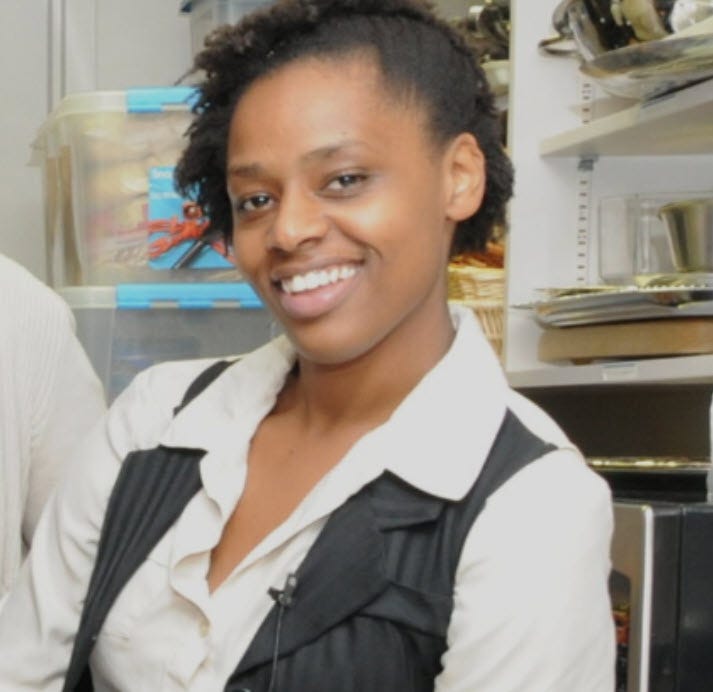
Of her education at the time, she says: “The curriculum looked down upon big development organizations. I didn’t necessarily disagree with this, but I thought it was important to go to USAID and see the operation for myself. I found that the theories I learned in a classroom were validated when I worked for USAID.”
She found that the perspectives of U.S interventionists dominated the conversation around climate change response in Malawi. With this in mind, she began to focus on hands-on, community-led efforts – specifically in the realm of solar, water, and wind-powered energy. The Moving Windmills Project, originally founded by Dr. Kamkwamba’s husband, identifies communities in Malawi that are in need of this kind of sustainable infrastructure. They train community members on how to build and maintain these sources of energy based on their current skillset – the men learn to apply their metal working skills to windmills, and the women use their agricultural knowledge to create irrigation systems. In this way, the community members can take climate change responses into their own hands instead of being dependent on outside institutions.
When asked about what she believes to be the secret to effective climate change response, she replies: “I would say to give non-traditional candidates a chance. Find people who may not know how to give voice to the actions they make intuitively… The key is to cede power and give other people a chance to identify their gifts, nurture their strengths, and flourish in community.”
This doesn’t just apply to Malawians – anybody anywhere can do this. For example, the Citizens’ Climate Lobby (CCL) is a grassroots advocacy organization that brings together everyday people worried about the environment, providing them with training in writing op-eds, lobbying Congress, and identifying their community leaders that could make an impact in the climate conversation. CCL volunteers range from high school students to farmers and concerned grandparents. You can find your local chapter here.
When the institutions fail, your community has your back.
Forrest Myer is a research assistant with the Climate Knowledge Collective. He is pursuing a B.A in English and a minor in political science at Stony Brook University in New York.
MISSION STATEMENT
Provide curated data to help make small choices which impact our warming planet and inspire us to nurture nature.

I hope you have enjoyed this issue of LIFE.
While our current administration does not support environmental protections — together we can fill the gap. Protecting threatened wildlife and our valuable ecosystems depends on each of us.
Nurture Nature!
Cheers,

Please share this article with others!